 Swysh Den
How Dr. Dish Shooting Machines Actually Improve a Young Player's Shot
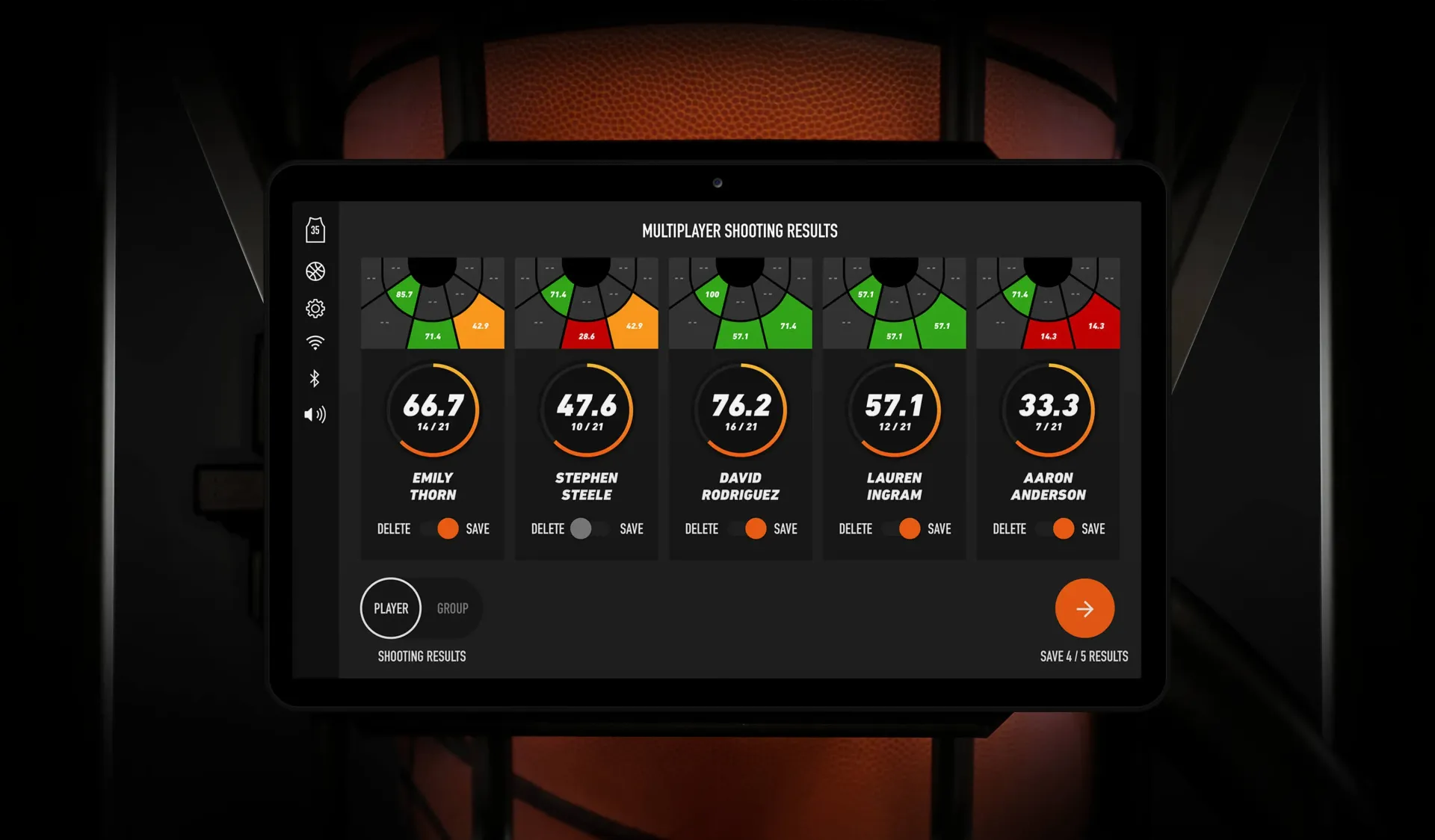
Walk into most gyms and you will see the same shooting drill. A player shoots, jogs after the rebound, walks it back, and shoots again. Between the chasing and the waiting, a large share of court time is not actual shooting. At Swysh Den, our five dedicated shooting courts run on Dr. Dish shooting machines, and the difference is not just convenience. It changes how a young player's shot actually develops.
Here is what is going on underneath the hood, and why it matters for a Swysher working on their shot.
The real bottleneck in shot development is reps, not talent
Shooting form is a motor skill, and motor skills improve through repetition. A study of typically developing children ages 6 to 12 found that practicing a procedural task across just a few consecutive trials produced measurable gains in speed and consistency, with performance improving as trial count went up (Acquisition of Motor and Cognitive Skills through Repetition in Typically Developing Children, PLoS ONE). The pattern holds across age groups: more quality repetitions in a session means faster skill consolidation.
The problem with a casual shooting drill is not the shooting. It is everything around the shooting. Chasing a rebound, dribbling it back, resetting your feet. All of that eats clock without building the motor pattern you are actually there to train. A Dr. Dish machine catches the ball, resets the rack, and delivers a new pass to the same spot in seconds. A player who spends a casual 30-minute session mostly retrieving their own rebounds can get meaningfully more shots up on the machine in that same window, because almost none of the time is lost to retrieval.
For a young player, that math compounds fast. More clean reps per session means more sessions worth of learning packed into the same hour, which is the entire argument for training on a machine instead of training around one.
Feedback that happens in real time, not after the fact
Reps alone are not the whole story. Deliberate, effective practice depends on getting feedback quickly enough to correct the next attempt, not just grinding out volume. That is the second piece the machine solves. Because the ball comes right back, a player and a coach can see and correct footwork, release point, or rhythm shot to shot, instead of losing that window during a long walk to retrieve the ball.
This matters more for younger players than older ones. A 7-year-old Little Swysher does not yet have the attention span to remember what their shot felt like 45 seconds ago after chasing down a rebound. Compress that gap to a couple of seconds and the correction actually sticks, because the feedback lands while the motor memory is still fresh.
Why arc and rotation are not just cosmetic
Coaches talk about a smooth, consistent arc and clean backspin because they are not just aesthetics. A 2022 study of collegiate basketball players published in the Journal of Sports Sciences measured the spin axis of made and missed jump shots and found that variability in spin axis alignment, not just the average alignment, was a strong predictor of lateral shooting accuracy (Slegers & Love, "The role of ball backspin alignment and variability in basketball shooting accuracy," Journal of Sports Sciences). In plain terms, the shooters who missed less were not necessarily the ones with textbook-perfect spin on every shot. They were the ones whose spin looked the same shot after shot. Consistency beat perfection.
That finding lines up with what a shooting machine is built to train. Every pass comes back from the same spot, at the same speed, to the same shooting pocket. A player is not adjusting to a different rebound angle or a different distance every rep. They are grooving the same motion over and over, which is exactly the condition under which a repeatable, low-variance release develops. Casual shooting drills, where every rebound is a little different, make that kind of consistency training much harder to isolate.
What this looks like on the machines at Swysh Den
Our Dr. Dish machines are part of every membership tier, with access scaled to the plan. A Rookie Membership includes one daily shooting machine session, and a Family Membership includes four daily shooting machine sessions across the household, alongside four daily dribbling machine sessions and four weekly skills clinics. Littles Membership, for our 4 to 8 year old Little Swyshers, skips the daily shooting machine but includes unlimited access to the dribbling machine and a weekly skills clinic, which is the right starting point for that age before shot mechanics become the focus.
Sessions are booked right in the Swysh Den app, up to 15 days ahead, in 30-minute blocks for the shooting machine and 15-minute blocks for the dribbling stations. New members start with a professional Skills Assessment so we know exactly what a player's shot looks like before they ever step onto a shooting court, which gives us a real baseline to train against instead of guessing.
Everything happens fully indoors and air conditioned, which in a Phoenix summer is the difference between a kid who wants to be in the gym and one who is counting down the minutes until they can leave.
Frequently asked questions
How is a Dr. Dish shooting machine different from a regular rebounder?
A rebounder just catches the ball. A Dr. Dish machine catches it, racks it, and passes it back to a specific spot at a specific speed, which is what lets a player get dramatically more shots up per session and train a consistent release instead of a different look on every rep.
What age can start using the shooting machines at Swysh Den?
Shooting machine access is included starting with our Rookie Membership. Our Littles Membership, for ages 4 to 8, focuses on the dribbling machine and weekly skills clinics first, since shot mechanics training is typically a better fit once a player has some foundational coordination in place.
Do I need to already be good to use the shooting machines?
No. Every new member starts with a professional Skills Assessment so we can see exactly where a player's shot is before they start training, and sessions are built around that starting point, not around where anyone else's shot is.
See it for yourself
Reading about reps and feedback loops only goes so far. The fastest way to understand why a shooting machine changes how a young player's shot develops is to watch a session, or better yet, get on the court for one. Book a free trial at Swysh Den and see the Dr. Dish machines, the dribbling stations, and the Interactive Wall in person.
Published 2026-04-06
Ready to see it for yourself?
Book a free trial session at Swysh Den and bring your player onto our courts.
Book a Free Trial